Almost Disappeared Completely, 30×40 in, 2024
The most restrained surface in the Wild collection is also its most technically precise. A thin grey field was wiped across the canvas with enough transparency that the canvas texture remains visible through it, less a painted layer than a veil. Beneath it, yellow and orange from a previous session show through in the lower right, not applied after the grey but revealed by it, the earlier self made partially visible through the later one. The grey does not erase what came before. It dims it. Against this atmosphere the black marks on the left were applied with maximum pressure and loaded paint, fast and decisive, their weight amplified by the restraint of everything surrounding them. At the upper left, blue marks in lighter pressure feel almost provisional, a question rather than a statement. The spatial structure of the painting enacts its subject with formal precision: the warm colour that persists in the lower right is not triumphant, it is simply refusing to disappear entirely. That distinction, between absence and near-absence, is what gives this painting its psychological accuracy and its critical weight.
From the Wild collection, 2024. Featured in Visual Art Journal, Curatory Magazine, and AATONU.
From the artist's journal:
"We fall into an image of ourselves rather than the truth of who we would like to be. Defined by our relationships, our work, our curated comparisons. I felt myself at 45 nearly absent from the life I was living, emptied out of desire, of direction, of purpose. I thought of the vibrant woman I was in my 20s and wondered how I had changed so fundamentally, which turns I made that brought me to this middle-aged reality of nearly complete absence of self. I sat with the strangeness of assumed happiness paired with deep aching despair. I sat wondering if I could pull myself back into focus. And then the search began."
Almost Disappeared Completely, 30×40 in, 2024
The most restrained surface in the Wild collection is also its most technically precise. A thin grey field was wiped across the canvas with enough transparency that the canvas texture remains visible through it, less a painted layer than a veil. Beneath it, yellow and orange from a previous session show through in the lower right, not applied after the grey but revealed by it, the earlier self made partially visible through the later one. The grey does not erase what came before. It dims it. Against this atmosphere the black marks on the left were applied with maximum pressure and loaded paint, fast and decisive, their weight amplified by the restraint of everything surrounding them. At the upper left, blue marks in lighter pressure feel almost provisional, a question rather than a statement. The spatial structure of the painting enacts its subject with formal precision: the warm colour that persists in the lower right is not triumphant, it is simply refusing to disappear entirely. That distinction, between absence and near-absence, is what gives this painting its psychological accuracy and its critical weight.
From the Wild collection, 2024. Featured in Visual Art Journal, Curatory Magazine, and AATONU.
From the artist's journal:
"We fall into an image of ourselves rather than the truth of who we would like to be. Defined by our relationships, our work, our curated comparisons. I felt myself at 45 nearly absent from the life I was living, emptied out of desire, of direction, of purpose. I thought of the vibrant woman I was in my 20s and wondered how I had changed so fundamentally, which turns I made that brought me to this middle-aged reality of nearly complete absence of self. I sat with the strangeness of assumed happiness paired with deep aching despair. I sat wondering if I could pull myself back into focus. And then the search began."
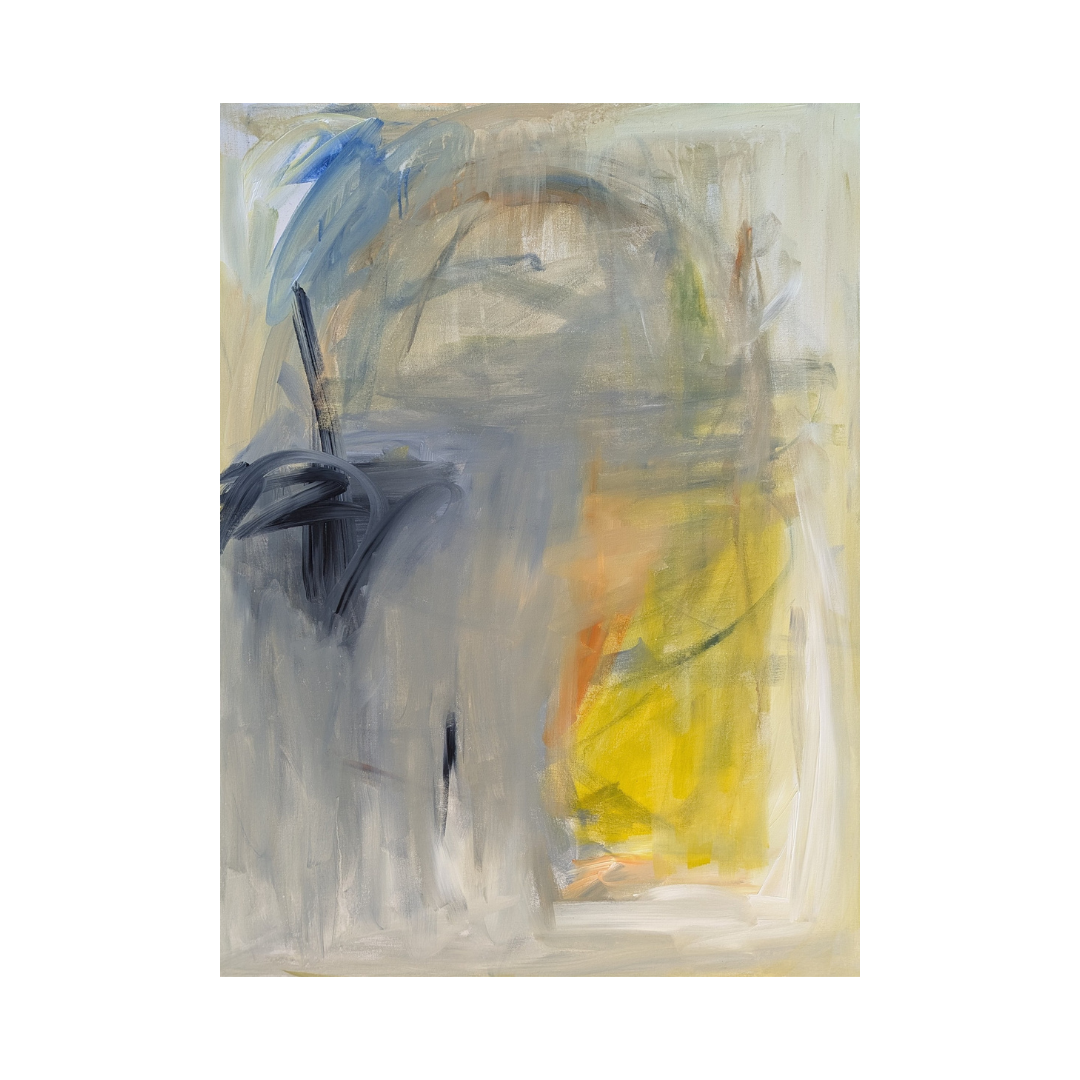 Image 1 of 8
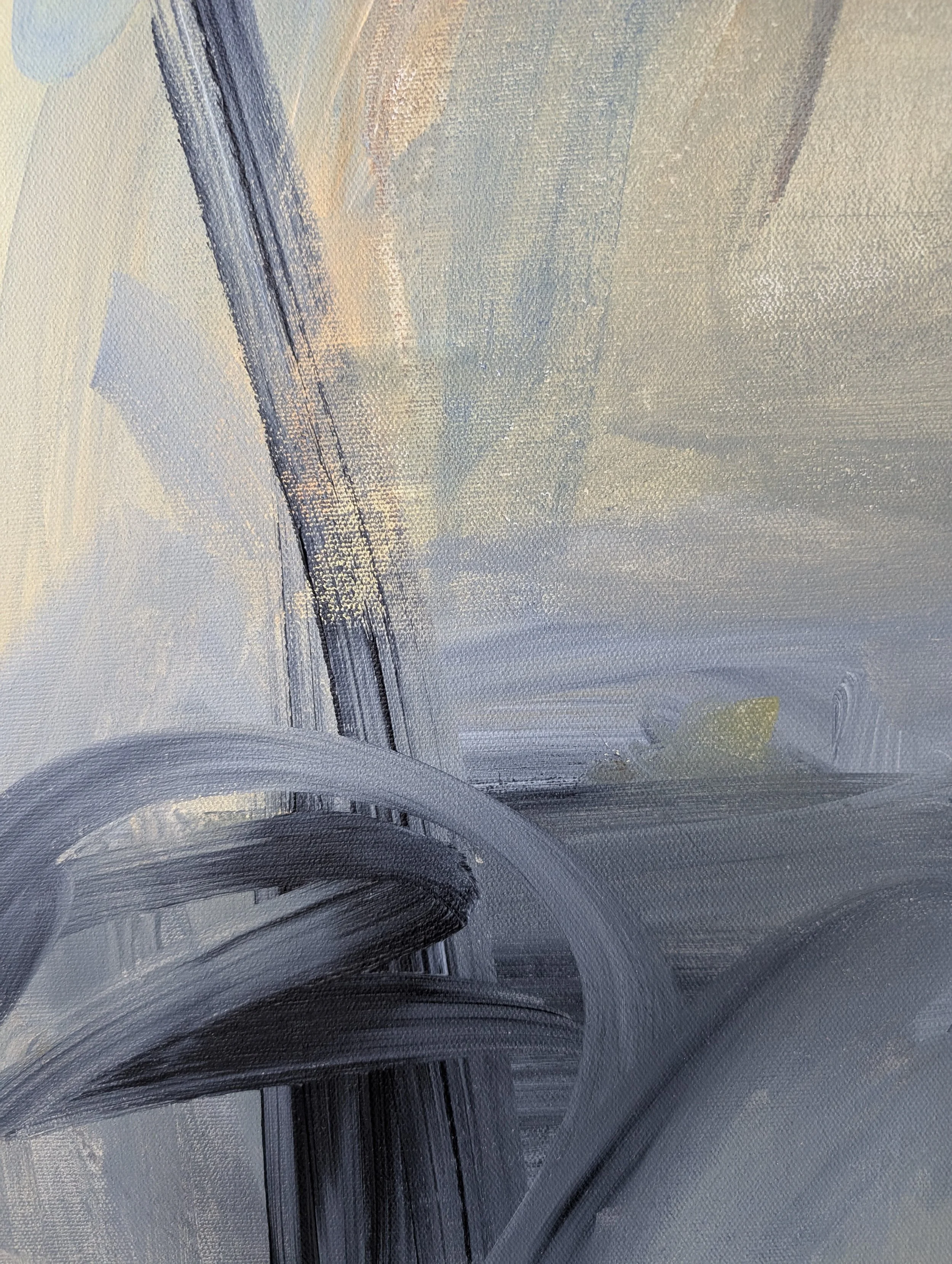 Image 2 of 8
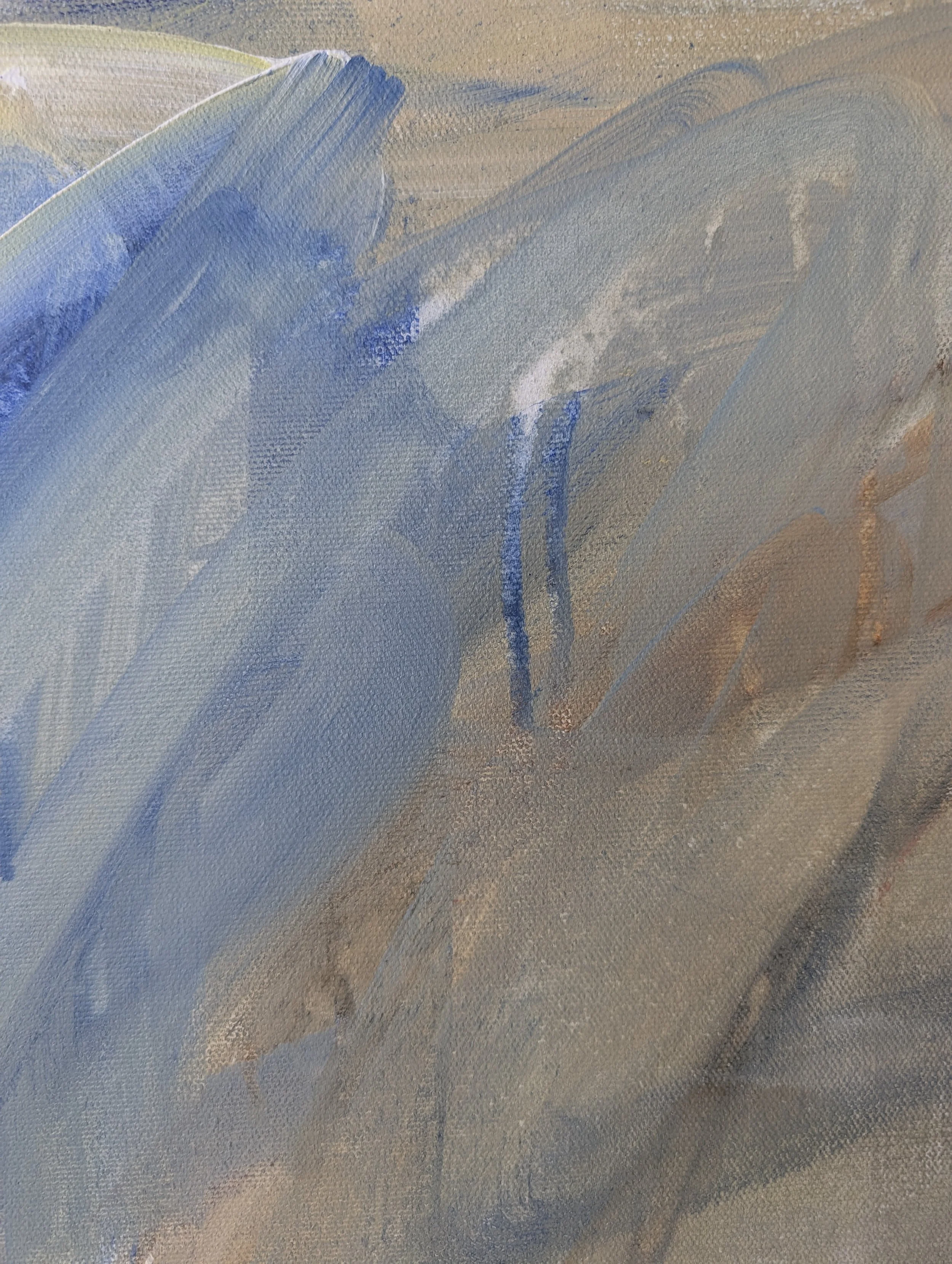 Image 3 of 8
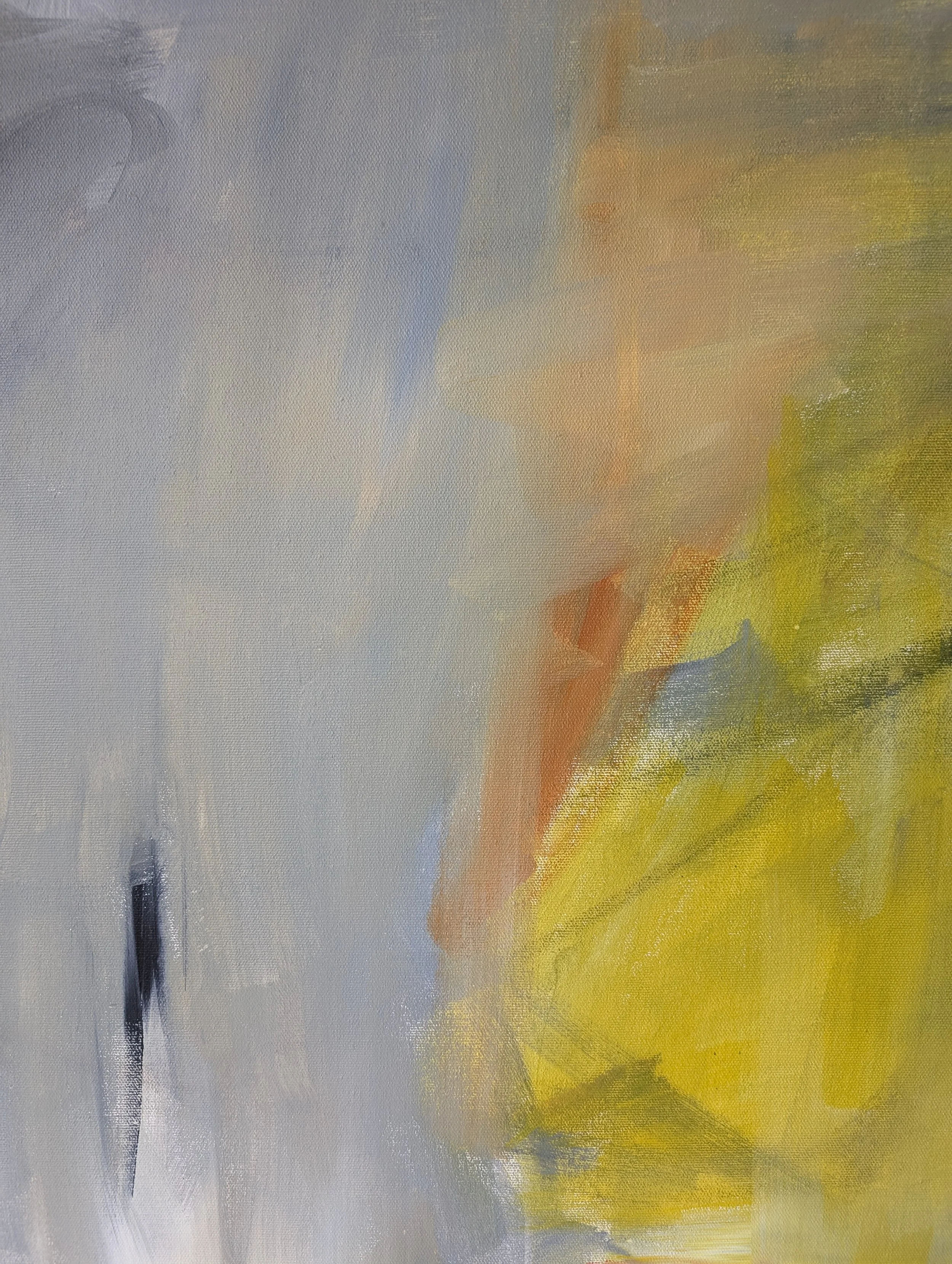 Image 4 of 8
 Image 5 of 8
 Image 6 of 8
 Image 7 of 8
 Image 8 of 8