The Only Way Out Is Through confronts the threshold that serious inner work always arrives at: the point where the comfortable story about yourself no longer holds and the only available direction is deeper.
The composition enacts this tension directly. A dense field of dark navy presses down from above while orange, pink, and yellow marks push upward through layered blues and greens, insistent and unresolved. The painting does not offer conclusion. It holds the specific weight of a decision made with full knowledge of what it will cost.
From the Wild collection, 2024. Featured in Curatory Magazine and ArtSeen Magazine.
From the artist's journal:
"What cannot be avoided by Artists or Spiritualists is going into the darkness. Facing the shadows, the secrets, the lies we've told on our path is the only way to let them go. This work explores the first steps from the bright and shiny world I thought myself to inhabit into the reality of my relationships, my work, my vision of my self worth. It is a choice to continue deeper into a space that will sure become darker in order to see the truth of what is possible. In order to emerge free from the bitter self judgement and comparison to an authentic freedom, a purposeful path, and a stable sovereignty."
The Only Way Out Is Through confronts the threshold that serious inner work always arrives at: the point where the comfortable story about yourself no longer holds and the only available direction is deeper.
The composition enacts this tension directly. A dense field of dark navy presses down from above while orange, pink, and yellow marks push upward through layered blues and greens, insistent and unresolved. The painting does not offer conclusion. It holds the specific weight of a decision made with full knowledge of what it will cost.
From the Wild collection, 2024. Featured in Curatory Magazine and ArtSeen Magazine.
From the artist's journal:
"What cannot be avoided by Artists or Spiritualists is going into the darkness. Facing the shadows, the secrets, the lies we've told on our path is the only way to let them go. This work explores the first steps from the bright and shiny world I thought myself to inhabit into the reality of my relationships, my work, my vision of my self worth. It is a choice to continue deeper into a space that will sure become darker in order to see the truth of what is possible. In order to emerge free from the bitter self judgement and comparison to an authentic freedom, a purposeful path, and a stable sovereignty."
 Image 1 of 8
 Image 2 of 8
 Image 3 of 8
 Image 4 of 8
 Image 5 of 8
 Image 6 of 8
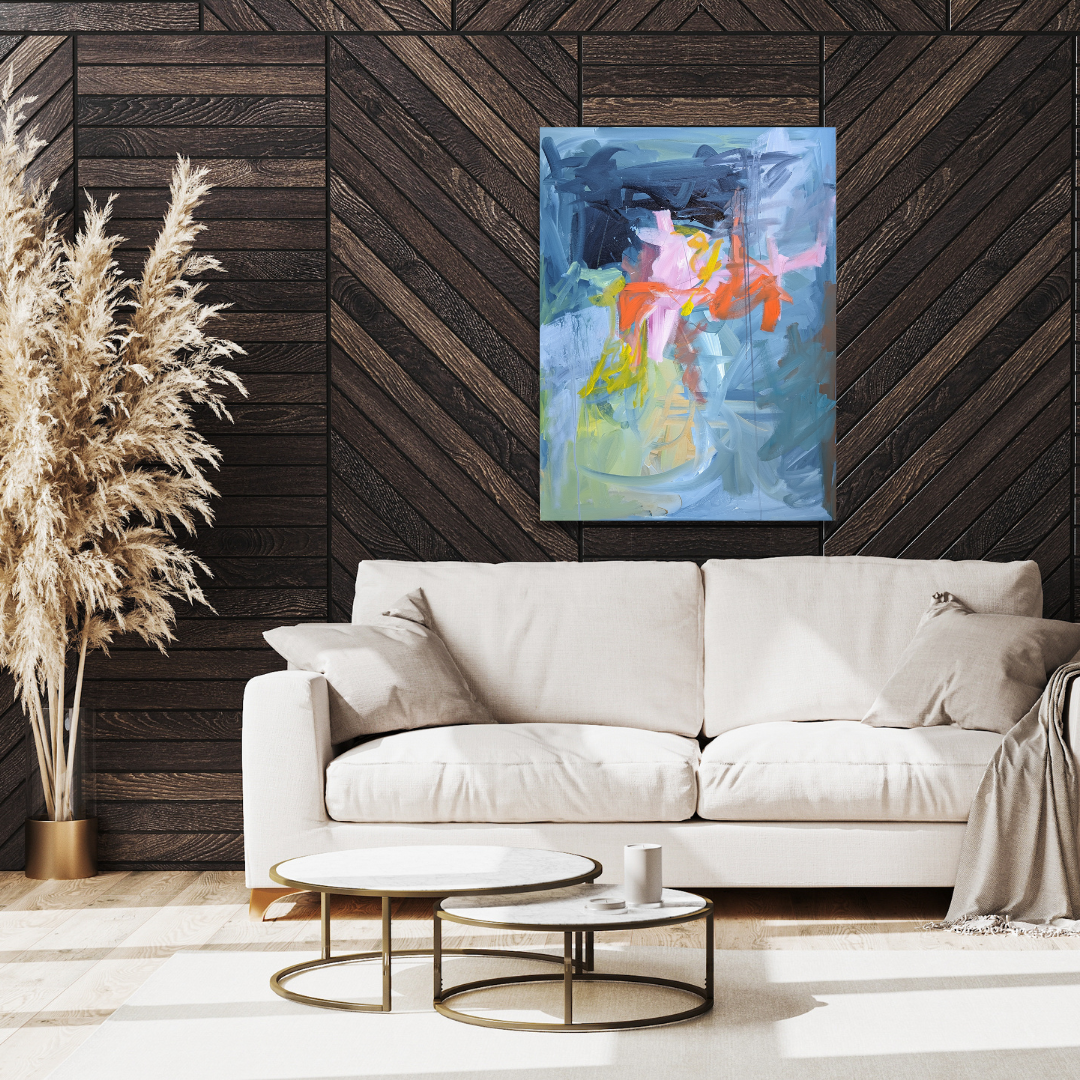 Image 7 of 8
 Image 8 of 8